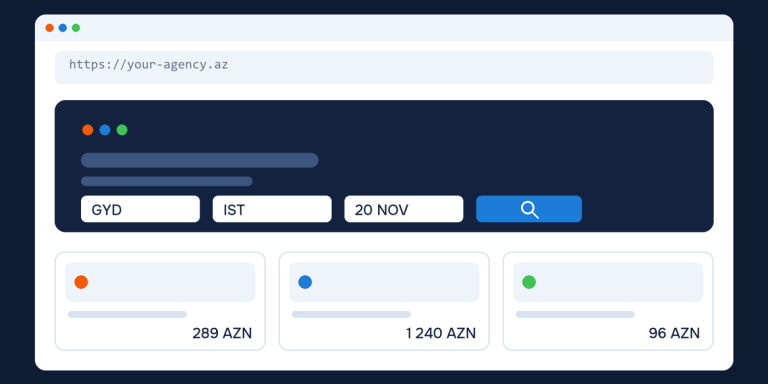
A booking system becomes the centre of a travel company’s daily work: search, booking, payment, ticketing, agents and reports all run through it. The wrong choice is expensive later — you have to switch systems, re-sign contracts and retrain the team. This article gives a practical answer to how to choose a booking system: 10 questions to ask a vendor and a checklist to use at the end.
1. Which products will you sell?
Flights, hotels, tour packages, visas, insurance, transfers — do you need everything at once, or will you start with one? A good system is modular: you should be able to start with flights today and add hotels and tours tomorrow without changing systems. Ask: “What does it take, and cost, to add a new module?”
2. Which sources does the system connect to?
The prices you sell come from your sources:
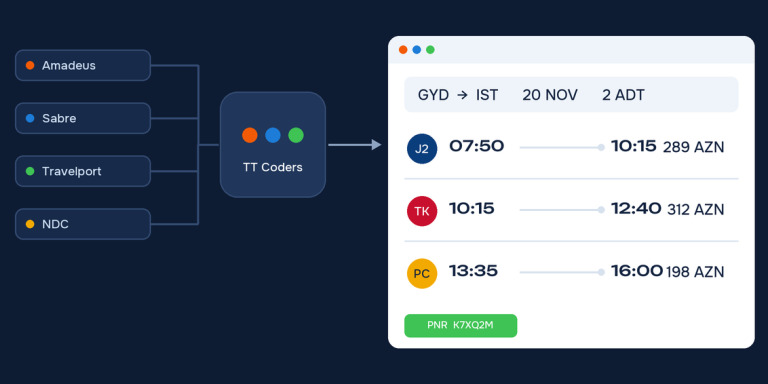
- Flights: GDSs (Amadeus, Sabre, Travelport), airline NDC channels, low-cost carriers.
- Hotels: bedbanks (Hotelbeds, GoGlobal, Hotelston and others), online platforms, your own direct contracts.
- Tours: your own packages and tour operators’ offers.
The key question: whose name are the contracts in? Some platforms supply content through their own contracts — easy to start, but prices and terms depend on them. A system that works with your own contracts is more independent and lasts longer. On the differences between GDSs: What is a GDS and What is Amadeus.
3. How are tickets issued and payments collected?
- Do you have IATA accreditation, or will tickets be issued through a consolidator? The system should support both models.
- Which payment methods work: local banks’ online payments, Apple Pay and Google Pay, balance payments for agents?
- Do you need multiple currencies, and how are exchange rates calculated?
- Card data should not be stored on your server: payment should happen on the bank’s secure page with 3D Secure.
4. Can you manage pricing and margin rules yourself?
Your profit lives in your pricing rules. In the admin panel you should be able to change these without a developer:
- markups by destination, airline, supplier or hotel;
- service fees, discounts and promo codes;
- different prices for B2C customers and agents.
5. Do you need a B2B area for agents?
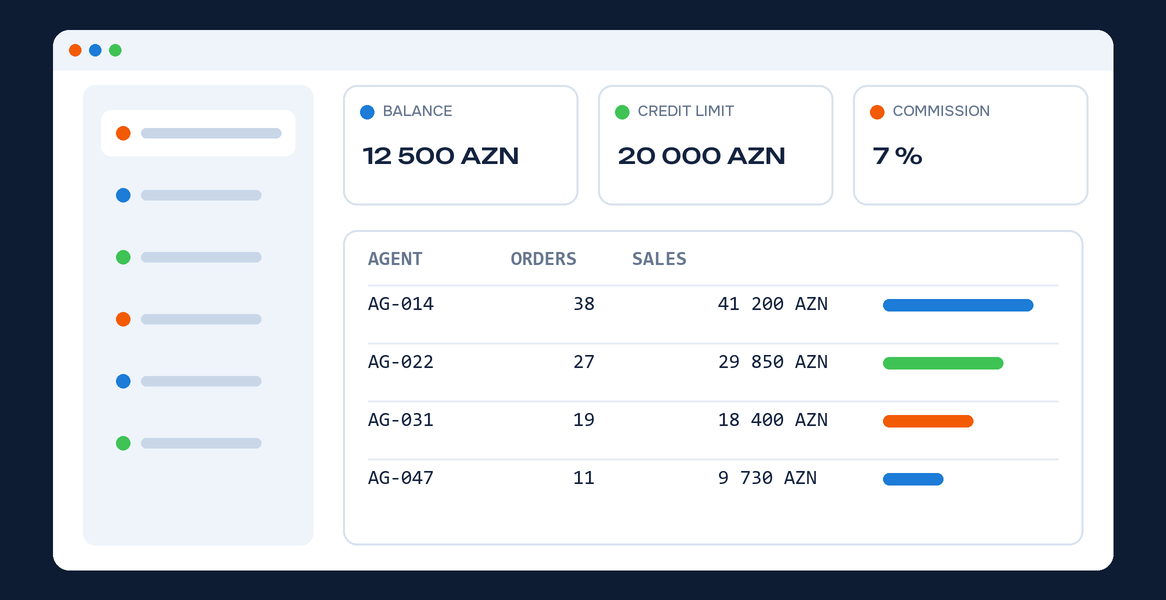
If you work with sub-agents, each agent needs their own account, balance, credit limit and commission or net-rate rule. Agents should book on their own, and invoices and reports should be generated automatically. Our solution: the B2B agent portal.
6. What happens after the booking?
This is the part most often forgotten during selection, even though much of an agency’s time goes into post-booking work:
- automatic sending of e-tickets and hotel vouchers;
- tracking schedule changes and notifying the customer;
- changes and refunds — penalties calculated according to fare rules;
- accounting for cancelled bookings and refunds.
Ask: “Are refunds done in the system, or manually in the GDS terminal?”
7. What about reports and accounting?
- daily sales, payments and debts;
- settlements with suppliers and consolidators;
- commissions and balances per agent;
- export to Excel or accounting software.
When the booking system and accounting work separately, it means hours of manual reconciliation every month. Our solution: accounting and back office.
8. Is the site fast, mobile-friendly and ready for SEO?
Most customers arrive on a phone and search for you on Google. Check:
- how many seconds search results take to load on a phone;
- whether destination and tour pages appear in search, while dynamic search pages are kept out of the index;
- whether there are multiple languages (AZ, EN, RU) with separate pages for each.
More: SEO for travel websites.
9. What is the total cost: year one and beyond?
Don’t look only at the initial price. The total cost includes:
- one-time development or licence;
- monthly subscription, server and support;
- whether there are per-booking or per-search fees;
- the price of adding a new supplier or module;
- the GDS, IATA and bank costs the agency pays separately.
Comparison in figures: how much a flight booking system costs and how much a travel website costs.
10. Support, security and who owns the data?
- Support: who do you contact when something goes wrong, how fast do they respond, and is support in your language and time zone?
- Updates: who updates the system when GDS and airline APIs change, and is that included in the price?
- Security: backups, access rights, where is the server located?
- Data: the customer base, bookings and reports are yours — can you export them if you change vendor? Whose name are the source code and domain in?
Bonus: ask for a demo
Look at a working system, not a presentation: real search, a booking in the test environment, ticketing, a refund and the admin panel. If possible, talk to a company that already uses the system.
Checklist
| Question | Answer |
|---|---|
| All the products you need (now and later) are supported | Yes / No |
| Connects to the GDS, NDC and hotel sources you need; it is clear whose name the contracts are in | Yes / No |
| IATA and consolidator models and local payment methods work | Yes / No |
| I can change pricing rules myself in the admin panel | Yes / No |
| There is a B2B agent area (balance, limit, commission) | Yes / No |
| Changes, refunds and schedule changes are handled in the system | Yes / No |
| Reports and accounting export are available | Yes / No |
| The site is fast, mobile-friendly, multilingual and SEO-ready | Yes / No |
| The total cost for year one and later years is given in writing | Yes / No |
| Support, updates and data ownership are written into the contract | Yes / No |
To work through these questions together, book a free consultation — we’ll show you our system in demo mode. See our flight and hotel booking system pages.
Frequently asked questions
Ready platform or custom system?
A ready platform launches quickly, but its rules and capabilities belong to the platform. A custom or customisable system adapts to your processes. The choice depends on your sales volume, B2B needs and budget. A detailed comparison: white label vs custom system.
Should I connect to several GDSs at once?
One source can be enough at the start. As sales grow, a second GDS or NDC helps find the best fares — which is why it matters that the system can take on new sources.
What should I prepare before choosing a system?
A short list of the products you sell, user roles (manager, agent, accountant), your existing contracts and the reports you want. It helps the vendor give an accurate proposal.