Amadeus is one of the world’s largest global distribution systems (GDS). Through Amadeus, a travel agency searches flights from hundreds of airlines, hotels and car rentals on one screen, books them and issues tickets. This guide explains what Amadeus is, how an agency connects to it, the difference between the terminal and the API, and how to sell Amadeus fares on your own website.
What is Amadeus
Amadeus was founded in 1987 by four European airlines — Air France, Iberia, Lufthansa and SAS — as an alternative to the American systems Sabre and Apollo. The company is headquartered in Madrid, its main data centre is in Erding, Germany, and product development is based in Sophia Antipolis near Nice in the south of France.
Today Amadeus works in two large areas:
- Distribution (GDS): delivering the content of airlines, hotels, car rental companies and other suppliers to travel agencies and online sales channels.
- IT solutions: the Altéa passenger service system for airlines and software for airports and hotels.
For an agency the first area is what matters: Amadeus acts as a single window between airlines and the agency.
What Amadeus gives a travel agency
- Flights: schedules, availability and fares from hundreds of airlines in real time. Fare rules (changes, refunds, baggage) are visible before booking.
- Bookings (PNR): passenger names, flights, contact details and special services kept in one booking record.
- Ticketing: e-tickets and EMDs for ancillary services such as baggage or seats.
- Hotels and cars: large hotel chains and rental companies in the same system.
- Negotiated fares: private fares agreed with an airline or a consolidator can be loaded into the system.
- Queues and reports: schedule changes, ticketing deadlines and sales reports.
Three ways to work with Amadeus
1. The terminal: Amadeus Selling Platform Connect
An agent’s daily workplace is Amadeus Selling Platform Connect, opened in a browser. It has a graphical interface as well as the short cryptic commands experienced agents prefer. The terminal is built for manual work: every search and booking takes the agent’s time.
2. The API: automated sales on your website and app
With Amadeus web services (API), search, booking, payment and ticketing are done by software. A customer chooses a flight on your website, pays and receives the e-ticket by email — without an agent. Connecting to the API requires a separate agreement with Amadeus, development in a test environment and passing a technical certification.
3. Through a consolidator or host agency
Small agencies often sell without their own GDS contract, through the B2B portal of a larger ticketing agency (a consolidator). It is simple to start with, but prices and conditions depend on the consolidator.
Key Amadeus terms and booking steps
An Amadeus agent’s daily vocabulary comes down to a few key terms:
- PNR (Passenger Name Record): the booking itself. It is found by a six-character code (for example, X7K2LM) and holds all the details.
- Segment: one flight leg. A Baku–Istanbul–London trip has two segments.
- TST (Transitional Stored Ticket): the pricing record stored in the PNR. The ticket is issued from it.
- Time limit: the deadline for keeping a booking without a ticket. If the ticket is not issued in time, the airline may cancel the seats.
- EMD: an electronic document for ancillary services such as baggage or seat selection.
- Queue: the list where schedule changes and alerts arrive for the agency.
Creating a simple booking in the terminal goes roughly like this:
| Step | What is done | Example command |
|---|---|---|
| 1 | Check availability | AN |
| 2 | Sell a seat on the flight | SS |
| 3 | Passenger name and contact | NM, AP |
| 4 | Ticketing arrangement | TK |
| 5 | Price the booking and create a TST | FXP |
| 6 | Save the booking | ER |
| 7 | Issue the ticket | TTP |
When selling through the API, software performs the same steps automatically: the customer only chooses the flight, enters details and pays.
What you need to connect to Amadeus
- A contract: Amadeus works through local offices or distributors in each country. Subscription fees, segment-based payments and incentives depend on the market and sales volume, so the exact terms come from the local representative.
- Ticketing rights: Amadeus is enough to make bookings, but issuing tickets in your own name requires IATA accreditation (BSP). Agencies without IATA issue tickets through a consolidator.
- Training: Amadeus offers official training, and local training centres run courses. Core topics: creating a PNR, pricing, ticketing, changes and refunds.
- A technical partner for the API: an API integration needs development, testing and certification, done by your own IT team or an experienced developer.
Amadeus vs Sabre vs Travelport
There are three major global GDSs today. Their functions are similar; the differences are mainly in markets, airline content and commercial terms.
| System | Headquarters | Strongest markets | Note |
|---|---|---|---|
| Amadeus | Madrid, Spain | Europe, Middle East, Asia, Latin America | Also provides the Altéa system to airlines |
| Sabre | Texas, USA | North America, Asia-Pacific | The first computer reservation system (American Airlines, 1960s) |
| Travelport | Near London, UK | Europe, Asia, Middle East | Galileo, Apollo and Worldspan combined in one company |
There is no single “best GDS”: the right choice depends on the destinations you sell, which airlines give better fares in which system, and the commercial offer. Larger agencies often use two or three systems together through APIs and pick the cheapest fare automatically. We explain how these systems came about in the history of GDS.
Selling Amadeus fares on your own website
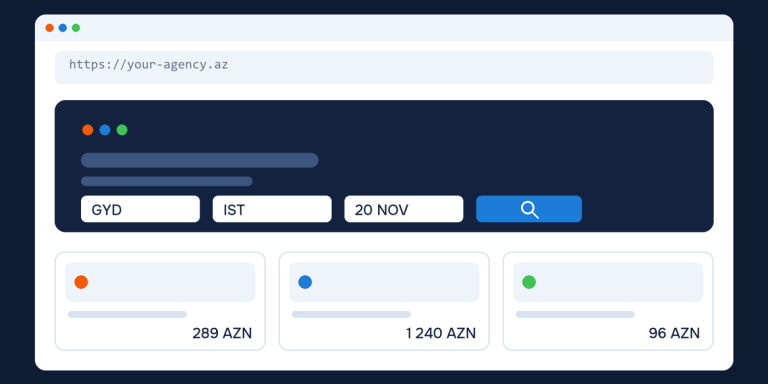
The model where a customer calls to order a ticket is fading: travellers want to see the price and buy straight away. A sales flow built on the Amadeus API works like this:
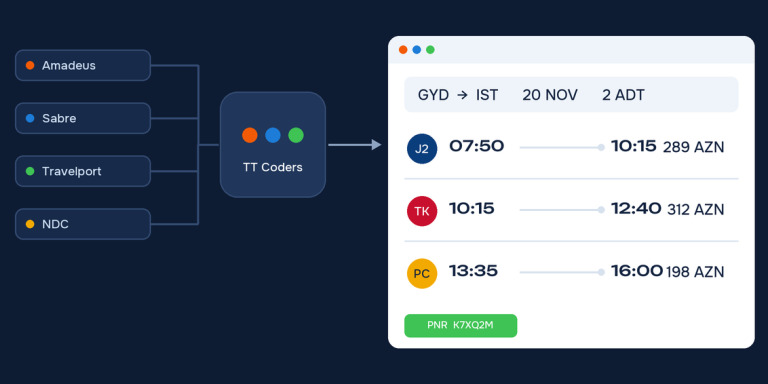
- The customer chooses a route and dates; the system shows fares from Amadeus (and, if you like, Sabre, Travelport and airline NDC channels) in one list.
- Fare rules and baggage allowance are shown while choosing.
- The customer enters passenger details and pays by card.
- The system creates the booking, issues the ticket automatically and emails the e-ticket.
- All sales, payments and commissions appear in the admin panel.
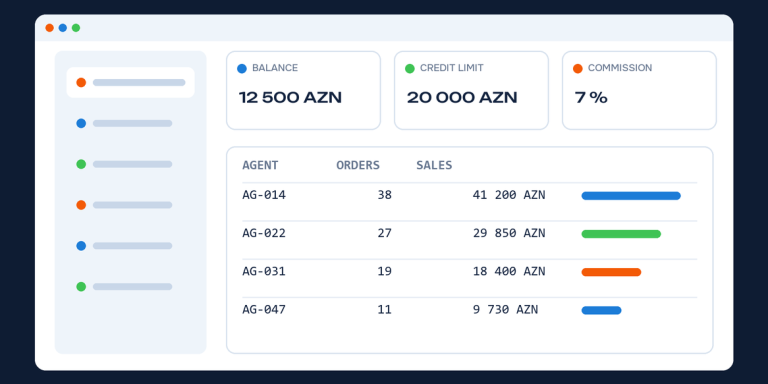
At TT Coders we have built Amadeus, Sabre and Travelport integrations for travel companies. Based on that experience, our flight booking system automates search, booking and ticketing on your website. If you work with sub-agents, a B2B agent portal lets them sell the same fares through their own accounts.
Frequently asked questions
How can I learn Amadeus?
Amadeus has official online training, and local training centres run courses. To start, learn to create a PNR, search fares, issue tickets and handle changes and refunds. Practising in a training environment is the fastest way.
Is Amadeus free?
No. Amadeus works under contract. Subscription fees, segment-based payments and incentives vary by country and sales volume, so ask the local representative for exact terms.
Can I sell Amadeus tickets without IATA accreditation?
You can make bookings, but issuing tickets in your own name requires IATA accreditation. Agencies without IATA issue tickets through a consolidator, which also works with automated online sales.
How long does it take to launch a website on the Amadeus API?
It depends on the scope: a site that only searches and sells flights is ready sooner than a platform with hotel and B2B modules. Most of the time goes into Amadeus testing and certification, so working with a team that knows the process shortens the timeline considerably.