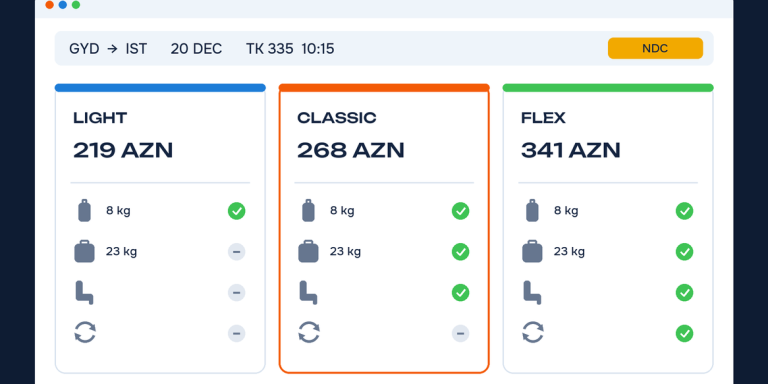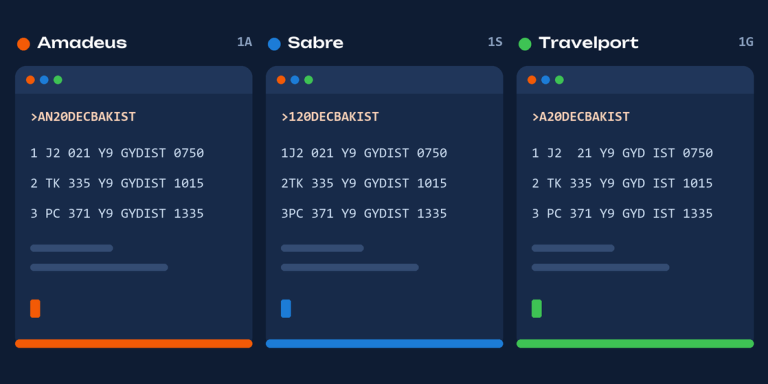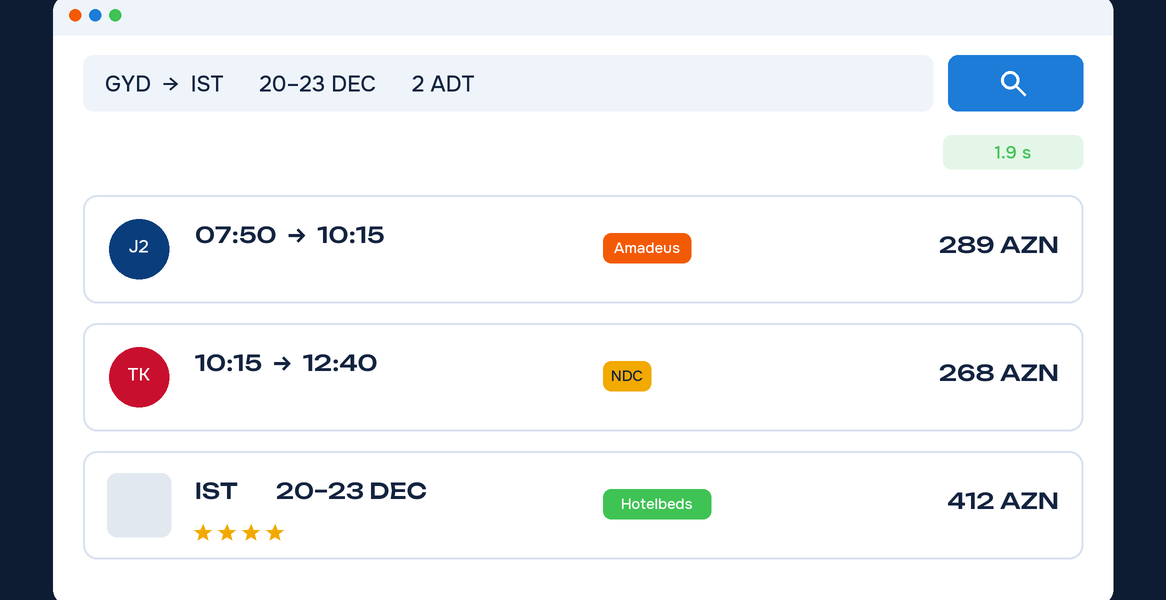
Short answer: a booking engine is the part of a travel website’s software that handles search, pricing, booking and payment in real time. When a customer searches for a flight, hotel or tour, the booking engine sends the request to your suppliers (GDS, NDC, bedbanks, your own contracts), merges the answers, applies your pricing rules, and finally turns the booking into a ticket or voucher. This article explains how a booking engine works, its parts and types, and what to look at when choosing one.
What is a booking engine
A booking engine is the “engine” that sits between the website the customer sees and the suppliers’ systems. The website is only the shop window: it shows the search form and the results. The booking engine works out which flight has seats, what a room costs, how the booking is created and how the ticket is issued.
The term is used in two senses, and it is worth not mixing them up:
- A hotel’s booking engine: a module that lets one hotel take direct bookings on its own website. The hotel enters its own rooms and rates.
- An agency’s or tour operator’s booking engine: a system that shows products from many suppliers in one search. This article is mainly about this kind.
How one search works: 6 steps
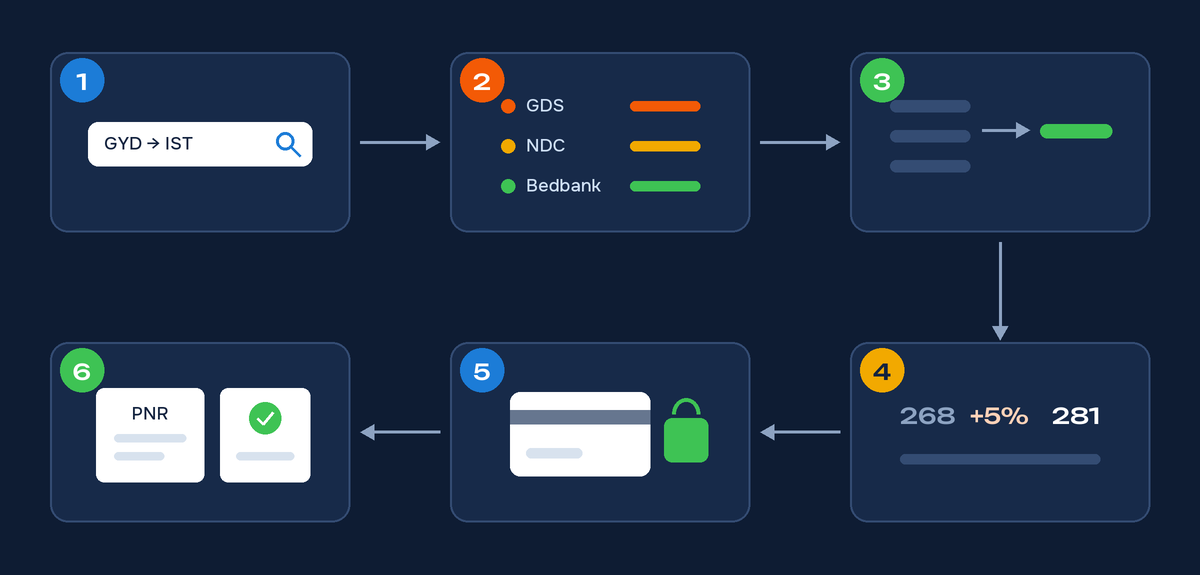
- Request: the customer chooses the destination, dates and number of travellers on the website.
- Parallel requests to suppliers: the booking engine queries the GDS, airlines’ NDC channels, bedbanks and your own contracts at the same time.
- Merging the results: answers arriving in different formats are converted to one format, the same flight or hotel is shown once, and the best option is picked.
- Pricing rules: your markup, service fees, discounts and currency rules are applied. The customer sees the final price.
- Price confirmation and payment: when the customer chooses, the price and availability are re-checked with the supplier, then the customer pays on the bank’s secure page.
- Booking and documents: the booking is created (a PNR for flights), the ticket is issued or the hotel voucher prepared, and sent to the customer by email.
For the customer, all of this should take a few seconds. So a booking engine’s speed, how it behaves when a supplier does not respond, and what it shows the customer when a price changes are the main signs of its quality.
The main parts of a booking engine
- Search form and results: mobile-friendly and fast, with filters and sorting.
- Supplier connectors: integrations for GDSs (Amadeus, Sabre, Travelport), NDC, bedbanks (Hotelbeds, GoGlobal and others), tour operators and your own contracts.
- Pricing engine: pricing rules by destination, supplier, airline or agent.
- Payment module: local banks’ online payments, 3D Secure, and balance and credit limits for agents.
- Post-booking module: tickets, vouchers, changes, refunds and schedule-change notifications.
- Admin panel and reports: orders, payments, supplier settlements and export to accounting.
Types of booking engine
| Type | What it sells and who it suits |
|---|---|
| Flights | GDS, NDC and low-cost carrier fares. For agencies and consolidators that sell tickets. |
| Hotels | Bedbanks, online platforms and direct contracts. For agencies and tour operators that sell hotels. |
| Tours and packages | Ready-made tours, or flight + hotel packages built automatically (dynamic packaging). For tour operators. |
| Multi-product | Flights, hotels, tours, transfers, visas and insurance in one basket. For growing agencies. |
Any type can work in two channels: B2C, a website for end customers, and B2B, a portal for sub-agents. In B2B each agent has their own account, balance, credit limit and commission rule. More: B2B agent portal.
How a booking engine connects to a website
- Widget: the search form is added to an existing site with a snippet of code, and results open on a separate page or subdomain. The fastest route.
- Full integration: search and results run on the site’s own pages, in the same design. The most convenient option for customers.
- API: the booking engine’s capabilities are offered to a mobile app or another system through an API.
An important SEO note: dynamic search result pages should be kept out of the index, while destination, hotel and tour pages should appear in search with stable addresses. More: SEO for travel websites.
What to look at when choosing a booking engine
- Speed: how many seconds do search results take on a phone? If one supplier is slow, are the other results shown without waiting?
- Suppliers: are the GDS, NDC and hotel sources you need ready, and how long does adding a new source take?
- Price accuracy: is the price re-checked before payment, and is a change shown clearly to the customer?
- Look-to-book ratio: some suppliers charge extra to those who search a lot and book little. At Duffel, for example, once the ratio exceeds 1,500 searches per order, each extra search costs $0.005. A good booking engine reduces this cost by caching results.
- Post-booking work: are changes and refunds done in the system, or by hand?
- Reports and data: are sales reports and accounting export available, and does the customer base belong to you?
The full checklist: how to choose a booking system: 10 questions. On a ready platform versus a custom system: white label vs custom system. To write down your requirements: technical specification template.
What a booking engine costs
The price depends on the number of suppliers, product types, B2B features and design. On the world market, ready platforms start at about $2,000 in year one, and custom builds from scratch at $25,000. At TT Coders a project costs 500–3,000 AZN, and server and support cost 50–200 AZN a month. A detailed comparison: how much a flight booking system costs and how much a travel website costs.
To see how a booking engine would work on your website, book a free consultation — we’ll show you our system in demo mode. Our solutions: flight and hotel booking system.
Frequently asked questions
What is the difference between a booking engine and a GDS?
A GDS (Amadeus, Sabre, Travelport) is a global system that distributes suppliers’ products to agencies. A booking engine is the software running on your website: it connects to the GDS and other sources, shows the results to the customer with your pricing rules, and completes the booking.
Can a booking engine be added to an existing website?
Yes. The search form can be added to an existing site as a widget. If the site is old or not mobile-friendly, building a new site together with the booking engine may be more effective.
Why do prices sometimes change at payment?
Flight and hotel prices change in real time, and availability drops as seats and rooms sell. So a good booking engine re-checks the price with the supplier before payment and shows any change clearly to the customer.
Do I need IATA accreditation for a booking engine?
Not for the booking engine itself. But to issue flight tickets in your own name you need IATA accreditation. Without it, tickets are issued through a consolidator or aggregator, and a booking engine can support those models too.