Short answer: dynamic packaging means taking flights, hotels, transfers and other services from different suppliers in real time and combining them into one package at one price for the customer’s chosen dates and destination. The difference from a ready-made tour: the package is not built in advance, it is assembled again with every search. This article explains how dynamic packaging works, what it gives tour operators and agencies, its risks, and what to look at when choosing a system.
Ready-made tour vs dynamic package: what’s the difference
| Criterion | Ready-made tour / dynamic package |
|---|---|
| How it is created | Ready-made tour: the tour operator builds it in advance Dynamic package: the system builds it automatically for every search |
| Source | Ready-made tour: allotments, charter seats, hotel contracts Dynamic package: GDS, NDC, bedbanks and your own contracts in real time |
| Dates | Ready-made tour: fixed, often weekly Dynamic package: any date and length the customer wants |
| Price | Ready-made tour: calculated in advance Dynamic package: calculated each time from the components’ current prices |
| Risk | Ready-made tour: unsold allotments and charter seats Dynamic package: price changes and part of the booking failing |
Many tour operators use both: ready-made tours with charters and allotments on the season’s main destinations, and dynamic packages for the remaining destinations and dates.
How a dynamic package is assembled
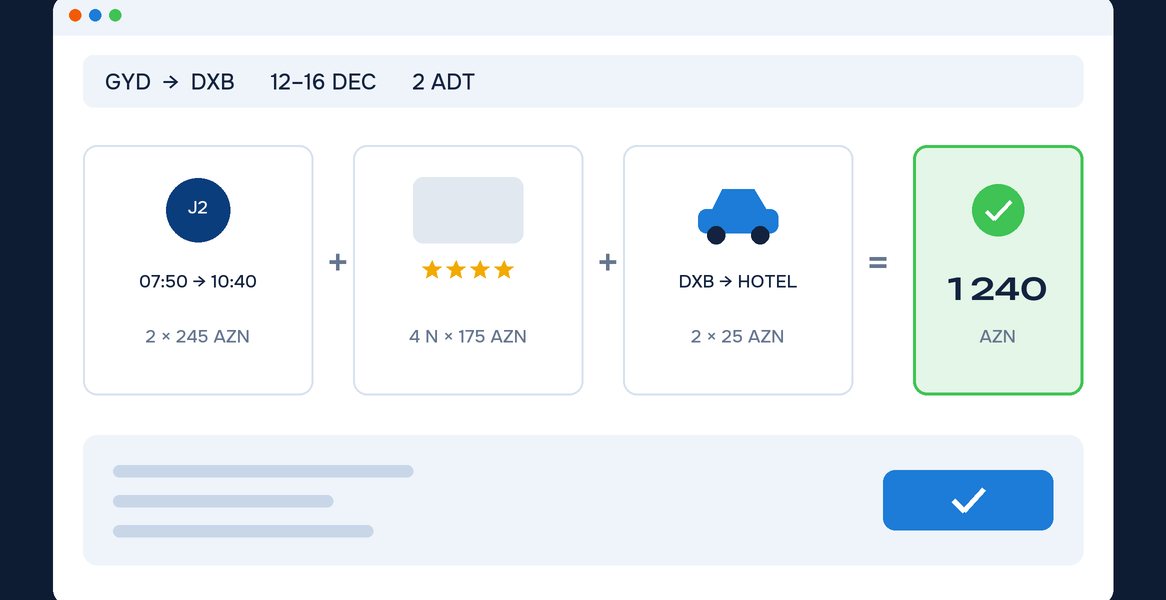
- Request: the customer chooses destination, dates and travellers, for example Baku–Dubai, 4 nights, 2 adults.
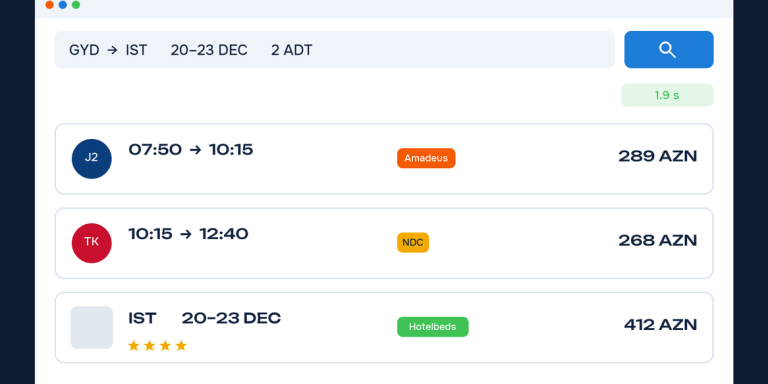
- Parallel search: the system searches flights (GDS, NDC, low-cost carriers) and hotels (bedbanks, your own contracts) at the same time.
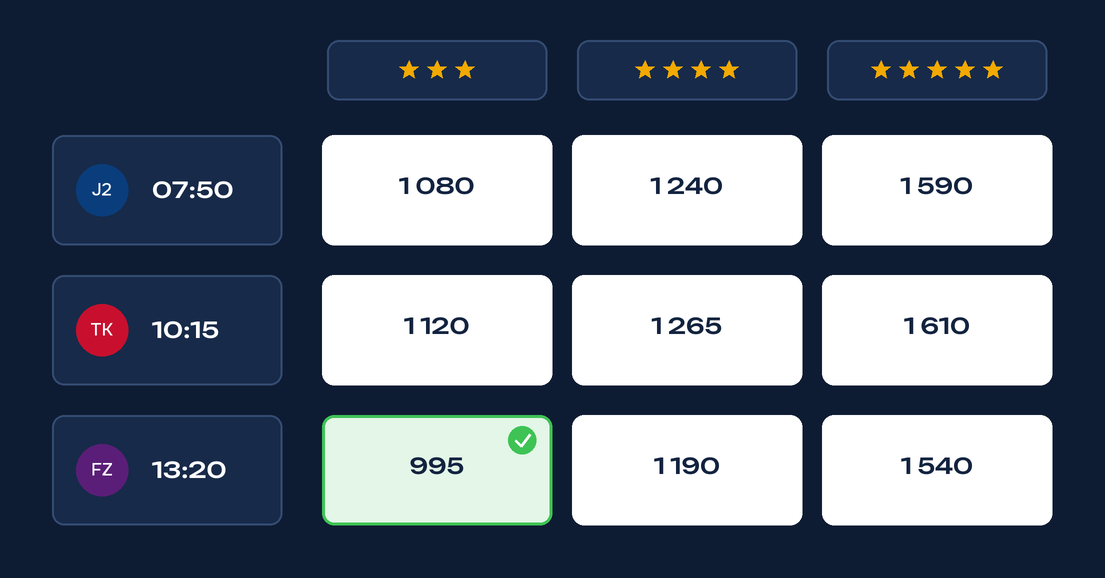
- Combinations: suitable flights and hotels are paired up. 20 flights and 50 hotels mean 1,000 possible packages, so the system ranks them by price, flight times and hotel rating.
- Package price: your package rule is applied to the components’ prices: an overall markup, service fee, discount.
- Confirmation and payment: when the customer chooses, the flight and hotel prices and availability are re-checked, then payment is taken.
- Booking: the flight and hotel are booked with separate suppliers, while the customer gets one order, one price and one travel document.
The technical basis of this process is the booking engine: what is a booking engine and how it works.
What dynamic packaging gives you
- Any date and length: the customer is not tied to a weekly charter schedule, so 3- or 9-night trips can be sold too.
- More destinations: you can sell hundreds of destinations without allotments or charters.
- Package rates: some bedbanks and airlines offer rates sold only inside a package, cheaper than when sold separately. These rates must be sold at the package’s total price only, without showing the customer the component prices.
- Higher margin: when the customer does not see component prices separately, the markup on the package is less noticeable.
- Upselling: transfers, excursions and insurance are added to the same basket.
- No inventory risk: you don’t pay in advance for allotments and charter seats that may not sell.
What to be ready for
- One component failing: the flight is booked but the hotel is not confirmed at the last moment. The system should then either offer an alternative hotel or cancel the flight automatically. Be sure to ask about this in the demo.
- Price changes: flight and hotel prices can change between search and payment. Any change must be shown clearly to the customer.
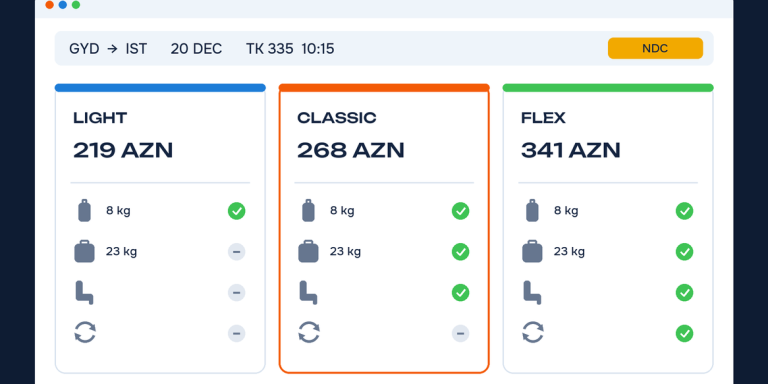
- Different cancellation terms: flights, hotels and transfers have different cancellation and refund rules. The package’s overall terms must be shown to the customer before the sale.
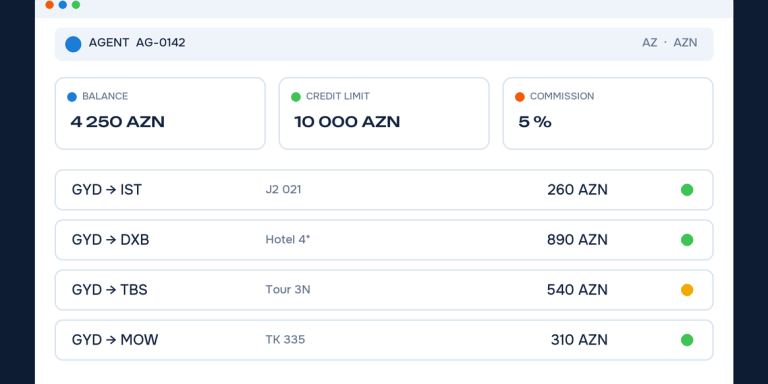
- Paying several suppliers: the customer pays once, while you settle separately with the airline, hotel and transfer suppliers. The accounting module should track this automatically.
- Legal liability: the company selling a package is usually liable to the customer for all its services. In the European Union, for example, this is governed by the Package Travel Directive (2015/2302). Keep this in mind if you sell to customers in Europe.
What to look at when choosing a dynamic packaging system
- Which flight and hotel sources are connected, and are package rates supported?
- How fast are combinations calculated, and how many seconds do results take on a phone?
- Can you change package pricing rules (overall markup, discounts, currency) yourself?
- What does the system do if a component fails?
- Can transfers, excursions and insurance be added?
- Can your ready-made tours be sold in the same system?
- Are packages also sold to sub-agents? More: B2B travel portal and sub-agent system.
What it costs
On the world market, dynamic packaging is often sold as part of a full platform. In the UK, for example, subscription platforms that include flights, hotels, transfers and dynamic packaging start at £500 a month. Development shops estimate a custom tour and package system at $15,000–35,000. At TT Coders a project costs 500–3,000 AZN, and server and support 50–200 AZN a month. A detailed comparison: how much a travel website costs.
To see how dynamic packages would work on your website, book a free consultation — we’ll show you our system in demo mode. Our solutions: tours and packages and hotel booking system.
Frequently asked questions
What is dynamic packaging?
Dynamic packaging is combining flights, hotels and other services from different suppliers in real time into one package at one price for the customer’s dates. The package is not built in advance; it is assembled again with every search.
What is a package rate?
A package rate is a rate that a hotel or airline allows to be sold only inside a package, together with another service, and is usually cheaper than when sold separately. Its price should not be shown to the customer separately.
What happens if the flight is booked but the hotel fails?
A good system either offers the customer an alternative hotel or cancels the flight booking automatically, so the customer doesn’t end up with half a package. Be sure to test this behaviour when choosing a system.
Does a dynamic package replace a ready-made tour?
Not entirely. Ready-made tours with charters and allotments are still good value on popular destinations. Dynamic packages cover the remaining destinations, dates and tailor-made trips. Many tour operators use both.